
If your Bunn coffee maker hot water dispenser is not working, the most likely culprit is a mineral buildup or an airlock in the internal lines. By performing a simple deliming process or checking your water supply connections, you can usually restore full functionality to your machine in minutes.
There is nothing quite like that first cup of coffee in the morning, especially when you rely on the consistent performance of a Bunn coffee maker. Many of these machines come equipped with a dedicated hot water dispenser, which is a fantastic feature for tea lovers, oatmeal fans, or anyone who needs quick hot water.
However, it can be incredibly frustrating when you go to pull that handle and nothing comes out. If you are currently dealing with a Bunn coffee maker hot water dispenser not working, you are certainly not alone.
By 2026, many of us are looking for ways to keep our kitchen appliances running longer rather than rushing to replace them. The good news is that most issues with these machines are mechanical or maintenance-related rather than catastrophic failures.
In this guide, we will walk through the common reasons why your dispenser might be acting up and exactly how you can get it back to its steaming, efficient self without needing a master’s degree in engineering.
Key Takeaways
- Mineral Deposits: Limescale is the #1 cause of a Bunn coffee maker hot water dispenser not working because it blocks narrow internal tubes.
- Airlocks: Air bubbles trapped in the heating tank prevent water from flowing, often occurring after the machine has been drained or moved.
- Water Supply Issues: Ensure your water line is turned on and free of kinks, as Bunn commercial models require consistent pressure.
- Heating Element Health: If the water is cold, the limit thermostat or heating element might need a professional inspection.
- Regular Maintenance: Cleaning your machine every 3-6 months prevents long-term hardware failures and keeps your coffee tasting fresh.
Understanding the Internal Mechanics
To fix a Bunn coffee maker hot water dispenser not working, it helps to know how the machine actually handles water. Bunn machines are unique because they keep a tank of water heated to the optimal brewing temperature at all times. This “ready-to-brew” feature is why they are so fast, but it also means the internal components are constantly under heat and pressure.
The Role of the Internal Tank
The hot water dispenser is fed by this internal reservoir. When you push the dispenser button or lever, you are essentially opening a valve that allows gravity or tank pressure to push hot water out. If the tank is empty or if there is an obstruction between the tank and the faucet, the system cannot perform its primary function. Understanding this helps you realize that the fix usually lies between the faucet and the main reservoir.
Pressure and Flow Dynamics
In many commercial or high-end residential Bunn units, water flow is dependent on the incoming water line pressure. If your water line is restricted, the reservoir may not refill, which prevents the hot water dispenser from pushing water out. Always check your external water source first before diving into the internal components of the machine.
Troubleshooting Mineral Buildup
Mineral buildup, or limescale, is the silent enemy of every coffee maker. Depending on the “hardness” of your local water, calcium and magnesium can accumulate inside the internal tubing. If your Bunn coffee maker hot water dispenser not working, it is highly probable that a piece of scale has lodged itself inside the dispenser nozzle or the feed tube.
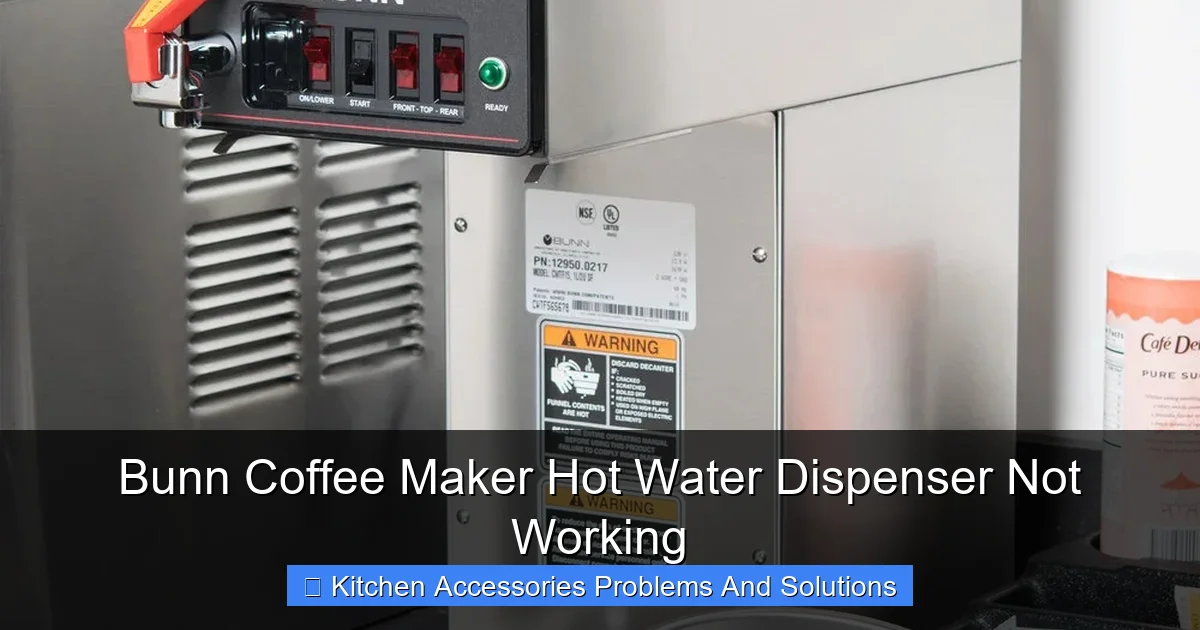
Visual guide about Bunn Coffee Maker Hot Water Dispenser Not Working
Image source: cdnimg.webstaurantstore.com
The Deliming Process
Deliming is the process of using a mild acid, usually a food-grade deliming agent or white vinegar, to break down these mineral deposits. To perform this, turn off the machine and let it cool completely. Carefully pour a cleaning solution into the reservoir and let it sit for the time recommended by the manufacturer. Once the time is up, cycle the machine until the water runs clear. This often clears out the blockage instantly.
Checking the Dispenser Nozzle
Sometimes the clog is not deep inside the machine but right at the exit point. The dispenser nozzle can become clogged with dried coffee oils or mineral sediment. You can use a paperclip or a small cleaning brush to gently clear out the opening. If you notice a white, chalky substance around the nozzle, that is a sure sign that limescale is to blame.
Solving Airflow and Airlock Issues
Have you recently moved your coffee maker or drained the tank for a deep clean? If so, you might have created an airlock. An airlock occurs when air becomes trapped in the heating tank or the supply line, creating a vacuum that prevents water from flowing through the dispenser properly. This is a very common issue when a Bunn coffee maker hot water dispenser not working is reported.
Priming the Pump
If you suspect an airlock, you need to “prime” the machine. This usually involves ensuring the tank is completely full and allowing the machine to heat up fully. In some models, you can carefully tilt the machine slightly to allow the trapped air bubble to escape through the internal vent tube. Always be careful when moving the machine, especially if it is full of hot water, to avoid accidental burns.
The Funnel Method
Another way to force water into the tank is to use a turkey baster or a funnel to manually add water through the top spray head area if the machine allows. This helps push the air out of the system. Once the tank is properly filled and the air is expelled, the dispenser should begin working again immediately.
Electrical and Thermostat Considerations
If the water is coming out, but it is not hot, or if there is no sound at all when you attempt to use the dispenser, you may be dealing with an electrical issue. While internal wiring is complex, there are a few simple checks you can perform to see if the machine’s “brain” is the problem.
The Limit Thermostat
Bunn coffee makers are equipped with a limit thermostat designed to cut power to the heating element if the tank gets too hot. Occasionally, this switch can trip accidentally or fail over time. If your machine is completely cold, this might be the culprit. You will need a multimeter to test for continuity, which is a great skill to learn if you enjoy DIY appliance repair.
Checking the On/Off Switch
It sounds simple, but check the power switch. Is the light on? If the machine has no power, the dispenser will not function. Sometimes the indicator light burns out even if the machine is working, but if the heater is not kicking on, ensure your power outlet is supplying the correct voltage. Always unplug the machine before attempting to inspect any electrical connections.
Water Supply Line Maintenance
For those using plumbed-in Bunn units, the water line itself is a critical link in the chain. If your Bunn coffee maker hot water dispenser not working, the issue might actually be external. A kinked hose, a closed shut-off valve, or a clogged water filter can prevent the machine from staying pressurized.
Inspecting the Filter
If you use an inline water filter, check the expiration date. A clogged filter will severely restrict the water flow, causing your dispenser to output a weak, sputtering stream or nothing at all. Replacing the filter is one of the easiest ways to improve water quality and machine performance.
Verifying Supply Pressure
If you have recently had plumbing work done, check to make sure the water line to your coffee station is fully open. If the pressure is too low, the solenoid valve inside the coffee maker may not be able to actuate, which stops the flow of water to the dispenser. A quick turn of the valve under your sink can often solve the problem in seconds.
When to Call a Professional?
While DIY repairs are rewarding, there comes a time when you should call in the pros. If you have tried deliming, checked for airlocks, and verified your water supply, but the machine still refuses to dispense hot water, there may be a failure in the solenoid valve or the internal heating element itself. Attempting to repair these high-voltage or pressurized components without experience can be dangerous.
Safety First
Always remember that coffee makers operate with scalding water and electricity. If you are not comfortable opening the chassis of your machine or working with electrical components, it is always safer to contact a qualified appliance technician. A simple repair can save you the cost of buying a new unit, but your safety is worth far more than the cost of a service call.
Regular Maintenance Schedule
To avoid future headaches, try to follow a maintenance schedule. Every three months, perform a thorough cleaning of the spray head and the dispenser nozzle. Once a year, if you have hard water, perform a deep delime. By keeping your machine clean, you ensure that your coffee tastes better and that your hardware stays in top-notch condition for years to come.
In conclusion, dealing with a Bunn coffee maker hot water dispenser not working is a manageable task if you approach it systematically. By checking for clogs, removing airlocks, and ensuring your water supply is consistent, you can often restore your machine to perfect working order. Keep your machine clean, handle it with care, and you will continue to enjoy that convenient cup of hot water whenever you need it.
Frequently Asked Questions
Why is my hot water dispenser sputtering instead of flowing?
Sputtering is a classic sign of an airlock in the system or a partial blockage caused by mineral deposits. Try running a deliming solution through the machine and ensure the tank is fully primed with water to push the trapped air out.
How often should I delime my Bunn coffee maker?
For most households, you should delime your machine every 3 to 6 months depending on your water hardness. If you notice white flakes in your water or the machine is getting louder, that is a sign it is time for a cleaning.
Is it safe to use vinegar to clean the dispenser?
Yes, white vinegar is an effective and inexpensive way to break down limescale. However, ensure you run several cycles of fresh water through the machine afterward to remove any lingering vinegar taste.
What if the dispenser light is on but no water comes out?
This suggests the electronics are receiving power, but there is a mechanical obstruction or a failed solenoid valve. Check for clogs in the nozzle first, as that is the easiest fix to perform at home.
Can low water pressure cause the dispenser to stop working?
Absolutely, especially on plumbed-in models. The system relies on a certain amount of line pressure to keep the internal tank filled; if the pressure drops, the dispenser will not have enough force to push the water out.
When should I replace my Bunn coffee maker instead of fixing it?
If the internal heating tank is leaking or if the cost of the replacement parts exceeds half the price of a new machine, it may be time for an upgrade. Otherwise, most Bunn components are modular and quite easy to replace.