
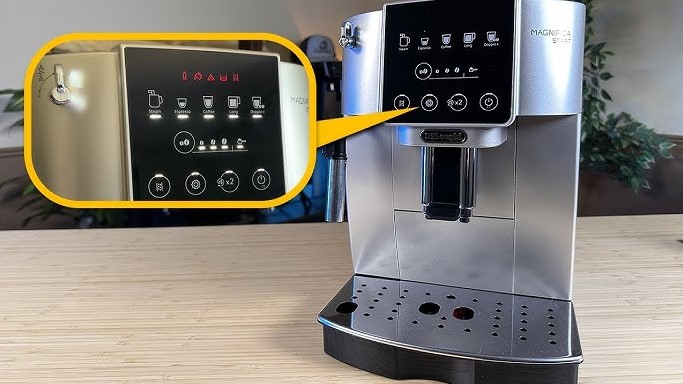
If you find your Delonghi coffee maker not working, start by checking your power supply and water levels, as these are the most common culprits. This guide covers everything from simple resets to advanced troubleshooting steps to get your morning brew back on track quickly and easily.
There is nothing quite as disappointing as walking into your kitchen, ready for that perfect morning espresso, only to realize your Delonghi coffee maker not working. Whether the machine is completely silent or just sputtering out a weak trickle of lukewarm water, it can definitely ruin the start of your day.
By 2026, these machines have become incredibly sophisticated, but that also means they have more components that can occasionally go sideways. The good news is that most issues you face are common, solvable, and don’t require an expensive trip to a repair shop.
When you notice your Delonghi coffee maker not working, it is usually a cry for basic maintenance rather than a sign that the machine has reached the end of its life. Let’s walk through the steps to get your caffeine routine back in business.
Key Takeaways
- Power Checks: Always verify your outlet and plug connection before assuming your Delonghi coffee maker not working is a complex internal failure.
- Descaling Importance: Mineral buildup is the #1 cause of low flow or pressure issues; routine descaling is vital for machine longevity.
- Sensor Errors: Modern Delonghi models have safety sensors that stop operation if the drip tray or bean hopper is not perfectly seated.
- Water Quality: Using filtered water prevents scale buildup, which is the leading reason for a Delonghi coffee maker not working correctly.
- The Reset Button: Performing a hard system reset or power cycle can clear temporary digital glitches that confuse the machine’s control board.
Understanding Why Your Delonghi Coffee Maker Not Working
When your machine stops functioning, it is usually trying to tell you something. Before you take apart the housing, look at the lights. Are there flashing icons? Is the machine plugged in? Often, we overlook the obvious because we are tired. Take a deep breath and look at the machine as if you were a mechanic. A Delonghi coffee maker not working is often just an error state that needs a simple nudge to clear.
Power and Connectivity Issues
If the machine is completely dead, check your power source first. Ensure the power cable is firmly seated in the back of the unit and the wall socket. If you are using a power strip, move the machine to a direct wall outlet to rule out a tripped surge protector. Many modern Delonghi units feature an eco-mode that turns the screen off; sometimes, you just need to press the power button once to wake it up from a deep sleep.
Checking the Water Circuit
Air bubbles are the silent enemy of the home barista. If your machine is whirring but nothing is coming out, the internal pump might be air-locked. This happens if the water tank runs dry or if the filter was not primed. Try lifting the water tank and putting it back firmly to ensure the valve at the bottom engages correctly with the machine’s intake.
The Essential Role of Descaling
If you have been wondering why your Delonghi coffee maker not working properly, look at your calendar. When was the last time you descaled? In 2026, water hardness remains the number one threat to espresso machine longevity. Minerals like calcium and magnesium build up inside the tiny tubes, eventually creating a blockage that the pump cannot push through.
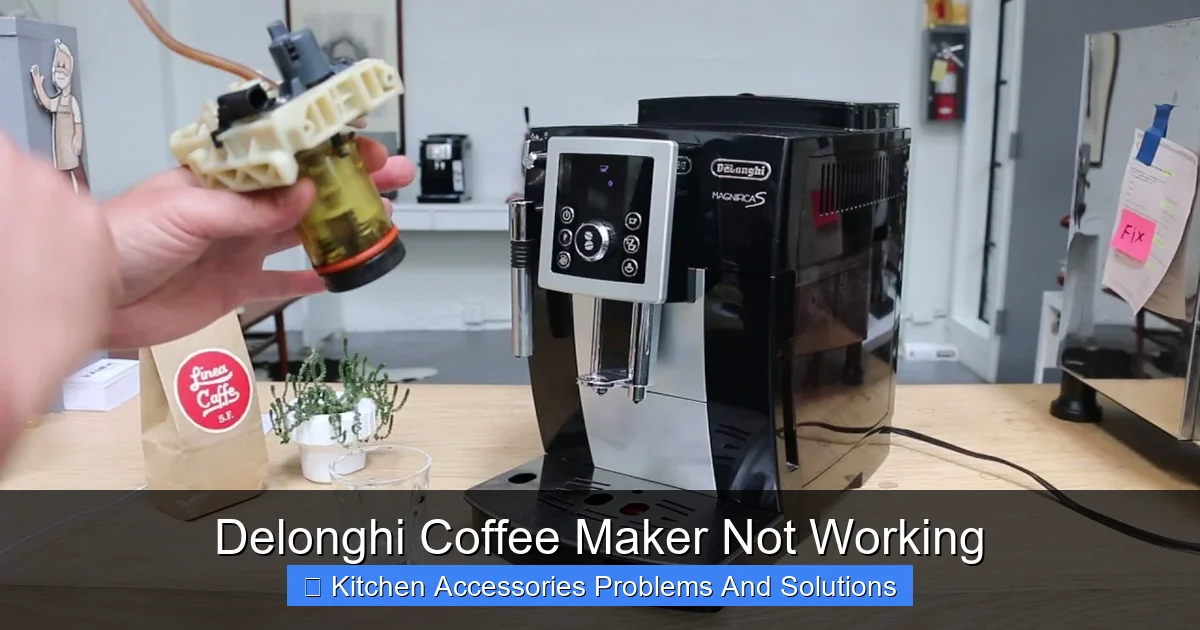
Visual guide about Delonghi Coffee Maker Not Working
Image source: storables.com
Recognizing the Warning Signs
Is your coffee coming out slower than usual? Is the machine making a louder, more strained grinding noise? These are classic signs of scale buildup. Descaling is not just a suggestion; it is a mandatory maintenance step. Most Delonghi machines come with a descaling alert light that tells you exactly when it is time to perform this procedure.
How to Descale Properly
Always use the official Delonghi descaling solution. Vinegar is often too harsh for the internal seals and can leave a lingering taste that ruins your beans. Follow the steps in your user manual, which usually involves pouring the solution into the tank, running the machine until it is empty, and then flushing the system with several tanks of fresh, clean water.
Troubleshooting Grinder and Bean Issues
Sometimes, the machine is perfectly fine, but the grind settings are causing a jam. If your Delonghi coffee maker not working during the grinding phase, you might have the grind size set too fine. When the coffee powder is too fine, the water cannot pass through the puck, causing the machine to stop to prevent internal pressure damage.
Adjusting the Grind Setting
Try turning the adjustment dial to a slightly coarser setting while the grinder is running. Never adjust the grinder while it is off, as this can damage the burrs. If the grinder sounds like it is straining, you may have an obstruction like a small pebble or an overly oily bean stuck in the chute.
Clearing the Bean Hopper
Sometimes, moisture gets into the bean hopper, causing the beans to stick to the sides and bridge over the grinder. Reach in and give the beans a stir. If you see oily residue on the inside of the hopper, wipe it clean with a dry cloth. Oils from dark roast beans can turn rancid and cause the beans to stick, leading to a situation where your Delonghi coffee maker not working because it cannot feed the grinder.
Common Sensor and Error Code Solutions
Delonghi machines are designed with safety in mind. They have numerous micro-switches that detect if parts are in the right place. If your Delonghi coffee maker not working and you see lights flashing in a strange pattern, it is likely a safety trigger. The most common culprit is the drip tray or the grounds container.
Checking the Infuser Unit
The infuser is the “heart” of your machine. It needs to be rinsed regularly. If it gets stuck in the wrong position, the machine will refuse to start. Open the service door and check if the infuser can be easily removed. If it is stuck, do not force it. Instead, turn the machine off and on again; the motor will often attempt to cycle the infuser back to the “home” position.
Drip Tray and Door Sensors
Ensure the front service door is pushed completely shut. Even a millimeter of a gap can prevent the machine from engaging the brewing cycle. Similarly, the drip tray must be fully inserted. If the machine thinks the tray is full or missing, it will prevent operation.
Maintenance Tips for 2026 and Beyond
To ensure you rarely have to deal with a Delonghi coffee maker not working, adopt a proactive maintenance schedule. Cleaning is not just about aesthetics; it is about performance. In 2026, technology allows for better monitoring, but the physical cleaning remains your responsibility.
The Daily Routine
Empty the grounds container daily. Old, damp grounds are a breeding ground for mold, which will affect the flavor of your coffee and can potentially clog the internal sensors. A quick wipe down of the steam wand immediately after use is also essential to prevent milk buildup, which can obstruct the nozzle and cause pressure errors.
The Weekly Routine
Once a week, remove the infuser and rinse it under lukewarm water. Avoid using soaps or detergents as they can strip the food-grade lubricant from the parts. While it is out, use a small brush to clean the area inside the machine where the infuser sits. Removing loose coffee dust prevents it from hardening into a paste that can jam the mechanical arms.
When to Call a Professional?
Even with the best care, sometimes you encounter a problem that is beyond a DIY fix. If you hear a grinding noise that sounds like metal-on-metal, or if you smell burning plastic, unplug the unit immediately. These indicate a failed motor or an electrical short.
Warranty Considerations
Most Delonghi machines come with a generous warranty period. Before you start unscrewing the casing, check your purchase date. If you are still under warranty, do not attempt to open the machine. Opening the casing will likely void your protection. Contact the Delonghi support team, provide them with your serial number, and let them handle the heavy lifting.
Finding a Qualified Technician
If you are out of warranty, look for an authorized service center. They have access to genuine OEM parts. Using knock-off or generic parts might seem like a way to save money, but in our experience, these parts rarely offer the same precision or lifespan as the original components, leading to a cycle where you find your Delonghi coffee maker not working again in just a few months.
In conclusion, a Delonghi coffee maker not working is rarely a total disaster. By systematically checking your power, water flow, sensor alignment, and cleanliness, you can resolve the vast majority of common issues at home.
Keep your machine descaled, your grinder clean, and your water filtered, and you will be enjoying café-quality lattes for years to come. Remember, the best coffee machines are the ones that are loved and maintained, so don’t be afraid to get to know your machine’s internals a little better.
Frequently Asked Questions
Why is my Delonghi machine making noise but not pouring coffee?
This is usually due to an airlock in the system or a clogged internal tube caused by mineral buildup. Try running the hot water function to clear trapped air or perform a full descaling process to remove blockages.
How often should I descale my Delonghi coffee maker?
You should descale your machine every 2 to 3 months, or immediately when the descaling light illuminates. If you live in an area with particularly hard water, you may need to descale as often as once a month to prevent issues.
What does a flashing “triangle” light mean?
A flashing triangle usually indicates a general error, such as the bean hopper being empty, the grounds container being full, or the door being left open. Check all compartments to ensure they are seated properly and the waste container is empty.
Can I use vinegar to clean my Delonghi?
While vinegar is a popular household cleaner, it is generally discouraged for Delonghi machines as it can be too acidic for internal seals. Always opt for the manufacturer-recommended descaling solution to ensure the longevity of your machine.
My coffee tastes weak; what is the problem?
Weak coffee is often a result of using a grind size that is too coarse or using low-quality, stale beans. Try adjusting your grinder to a finer setting and ensure you are using fresh, high-quality roasted beans to get a bolder extraction.
How do I reset my Delonghi coffee maker?
To reset your machine, perform a power cycle: unplug the unit from the wall, wait for at least 30 seconds, and then plug it back in. This simple step often clears temporary software glitches or sensor errors that prevent the machine from starting.