
If your Bonsenkitchen coffee maker is not working, don’t worry. Most common issues involve simple power, water flow, or scaling problems that you can fix at home. This guide covers easy steps to get your morning coffee flowing again quickly.
There is nothing quite like the smell of fresh coffee to start your day. However, waking up to find your Bonsenkitchen coffee maker not working can quickly turn your morning upside down. Whether the machine simply refuses to turn on or it is making a strange, rattling noise, experiencing a glitch with your favorite appliance is always frustrating.
Since we are heading further into 2026, many of these reliable machines have been working hard for months or years, and they might just need a little extra love to get back to peak performance. The good news is that most problems with these machines are not permanent failures.
Often, the solution is as simple as repositioning a part or running a quick cleaning cycle. In this guide, we will walk through the most common reasons why your machine might be acting up and exactly how you can address them. By the time you finish reading, you will be a pro at troubleshooting your coffee maker, saving yourself both time and money.
Key Takeaways
- Power Check: Always start by checking your power source and the machine’s plug before assuming the unit is broken.
- Descaling is Essential: Mineral buildup is the number one cause of brewing issues in coffee makers.
- Water Flow: Ensure the water reservoir is seated correctly and the filter basket is free of obstructions.
- Maintenance Matters: Regular cleaning extends the lifespan of your kitchen appliances significantly.
- Safety First: Never submerge the electrical base in water and always unplug the unit before performing repairs.
Understanding Common Power Issues
The most frequent reason people report a Bonsenkitchen coffee maker not working is that it simply refuses to power on. When the lights don’t blink and the water doesn’t heat up, your first instinct might be to panic. However, power issues are usually the easiest to resolve because they are often external rather than internal.
Checking the Electrical Connection
First, check the wall outlet. It sounds basic, but many people forget that kitchen circuits can trip easily if you have a toaster or kettle running at the same time. Try plugging a different small appliance into that same outlet to see if it works. If it does not, you have found the culprit – it is a power supply issue, not a machine issue.
Examining the Power Cord
Next, take a close look at the power cord of your Bonsenkitchen unit. Look for any visible fraying, kinks, or signs of damage. If your machine is older, the cord might have been pinched by the base of the machine or a kitchen drawer. If everything looks fine, ensure the plug is pushed firmly into the back of the coffee maker if it is a removable style cord, as these can sometimes become loose during routine cleaning.
Troubleshooting Water Flow and Brewing Delays
If your machine turns on but refuses to brew, or if the process takes significantly longer than usual, you are likely dealing with a blockage or a suction issue. Your coffee maker relies on a precise internal vacuum to pull water through the system. If that suction is interrupted, the machine will sputter or stop entirely.
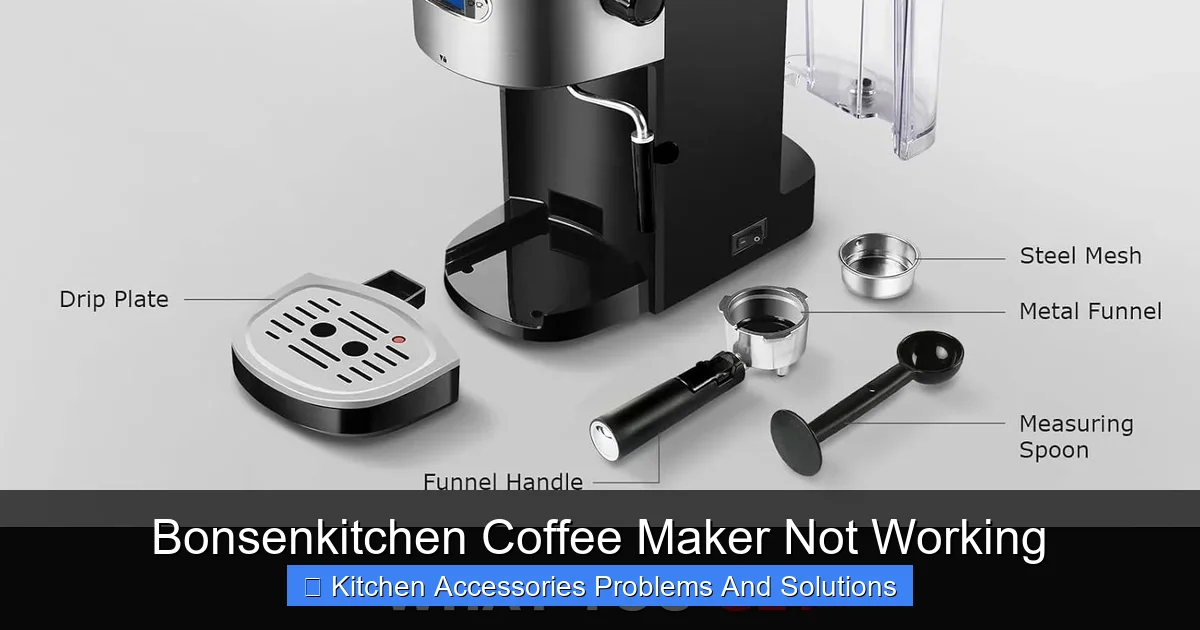
Visual guide about Bonsenkitchen Coffee Maker Not Working
Image source: m.media-amazon.com
The Importance of Seating the Reservoir
Many Bonsenkitchen models feature a removable water reservoir. If this reservoir is not snapped perfectly into place, the intake valve will not open. Take the tank off, empty it, and firmly press it back into the base until you hear a distinct click. You should also check the small valve at the bottom of the reservoir to ensure it is not clogged with debris or stuck in a closed position.
Clearing Clogged Internal Tubes
Over time, the narrow tubing inside the machine can collect calcium deposits from your tap water. This is especially common in areas with “hard” water. If the water cannot pass through, the machine will often shut off to prevent overheating. To fix this, you must run a cleaning cycle with a mix of water and white vinegar to dissolve those stubborn minerals.
The Role of Descaling in Appliance Longevity
When you notice your Bonsenkitchen coffee maker not working correctly, ask yourself when the last time you descaled it was. If you cannot remember, that is almost certainly the problem. Descaling is the process of removing mineral buildup that accumulates inside the heating element and pipes.
How to Properly Descale Your Machine
Start by filling the reservoir with a mixture of half white vinegar and half water. Run a full brew cycle without a coffee pod or grounds in the basket. Once the cycle finishes, let the machine sit for thirty minutes. This allows the vinegar to break down the hardened scale. Finally, run two or three cycles with plain, fresh water to flush out any lingering vinegar taste. Your coffee will taste better, and the machine will run much quieter.
Preventative Maintenance Tips
You can prevent future clogs by using filtered water instead of tap water. Filtered water has fewer minerals that cause scaling, meaning you will not have to descale your machine nearly as often. Additionally, try to wipe down the exterior and the filter basket area every time you brew to prevent coffee oil buildup, which can eventually lead to mold or restricted airflow.
Fixing Filter Basket and Pod Compatibility Issues
Sometimes the machine is working perfectly, but the filter system is causing a backup. If the water is overflowing from the basket, it usually means the grounds are too fine, or the filter is improperly positioned. Bonsenkitchen machines are designed to work with specific textures of coffee grounds. Using an espresso grind in a standard drip coffee maker will lead to immediate clogging.
Filter Basket Alignment
Ensure that your reusable filter or the provided basket is locked into the housing correctly. If it sits even slightly tilted, the water will bypass the filter and cause an overflow. Also, check for any residue from previous brews on the underside of the showerhead. If coffee oils have hardened there, they can obstruct the water flow, forcing water to back up into the basket.
Choosing the Right Grind
Always use a medium-coarse grind for drip coffee machines. If the grounds are too fine, they turn into a paste that water cannot penetrate. If your coffee maker is still not working after checking the filter, look at the bottom of the filter holder for any small bits of stuck coffee beans that might be blocking the drain hole.
Addressing Unusual Noises and Leaks
Hearing a loud grinding or gurgling noise can be alarming, but it usually indicates that the pump is struggling to draw water. If the machine is leaking, it often points to a worn-out gasket or a loose connection in the tank. These issues are common in appliances that have seen a lot of use.
When the Pump Sounds Strained
If your machine is making a loud buzzing sound but no water is coming out, it has an “airlock.” This happens when air gets trapped in the pump. Try gently shaking the machine or lifting the reservoir slightly while the unit is trying to brew to help clear the air bubble. If this does not work, it is a sign that the pump needs a thorough descaling, as mineral deposits are making it work twice as hard to push water.
Stopping Minor Leaks
Leaks usually come from the seal at the bottom of the water tank. Inspect the rubber O-ring on your tank’s nozzle. If it looks cracked, dry, or flattened, it will leak. You can often find replacement O-rings at a local hardware store. Before buying new parts, however, make sure you aren’t overfilling the tank, as the pressure can force water out of the seals.
Conclusion
Having a Bonsenkitchen coffee maker not working is never ideal, but it is rarely a terminal diagnosis. Most of the time, the fix is sitting right in front of you—whether it is a simple descaling, a reseated tank, or a quick cleaning of the filter basket. By maintaining a regular cleaning schedule and using filtered water, you can ensure your coffee maker stays functional for years to come.
Remember, if you have tried all the steps in this guide and the machine still refuses to cooperate, it might be time to check your warranty status or reach out to the manufacturer for support. Kitchen appliances are built to last, but they require periodic maintenance. Now that you know how to handle these common hiccups, you can get back to enjoying your delicious, hot coffee without the stress. Happy brewing!
Frequently Asked Questions
What should I do if the machine leaks from the bottom?
First, check if you have overfilled the water reservoir, as this can cause overflow. If it is not overfilled, inspect the rubber seal on the reservoir nozzle for cracks or debris and ensure the tank is seated firmly on the base.
How often should I descale my coffee maker?
In 2026, we recommend descaling your machine every 2 to 3 months depending on how frequently you use it and the hardness of your local water supply. If you notice the brew speed slowing down significantly, it is time for an immediate cleaning.
Why is my coffee weak even with the right grounds?
This is often caused by an incorrect water-to-coffee ratio or a clogged showerhead that prevents proper saturation. Try cleaning the showerhead area and ensure your filter is not allowing grounds to bypass the brewing process.
Can I use vinegar to clean my Bonsenkitchen machine?
Yes, a mixture of equal parts white vinegar and water is highly effective for descaling. Always run several cycles of plain water afterward to ensure all vinegar residue is removed so it does not affect your coffee’s flavor.
What if the power lights are flashing rapidly?
Rapidly flashing lights often indicate a system error or a sensor failure. Try unplugging the machine for ten minutes to perform a hard reset, and ensure the water reservoir is correctly placed, as some models have sensors that prevent brewing if the tank is empty.
Is it safe to use fine espresso grounds in my machine?
It is not recommended, as fine espresso grounds can easily clog the internal filter basket. Stick to a medium-coarse grind to ensure the water flows through the system at the correct pressure and pace.